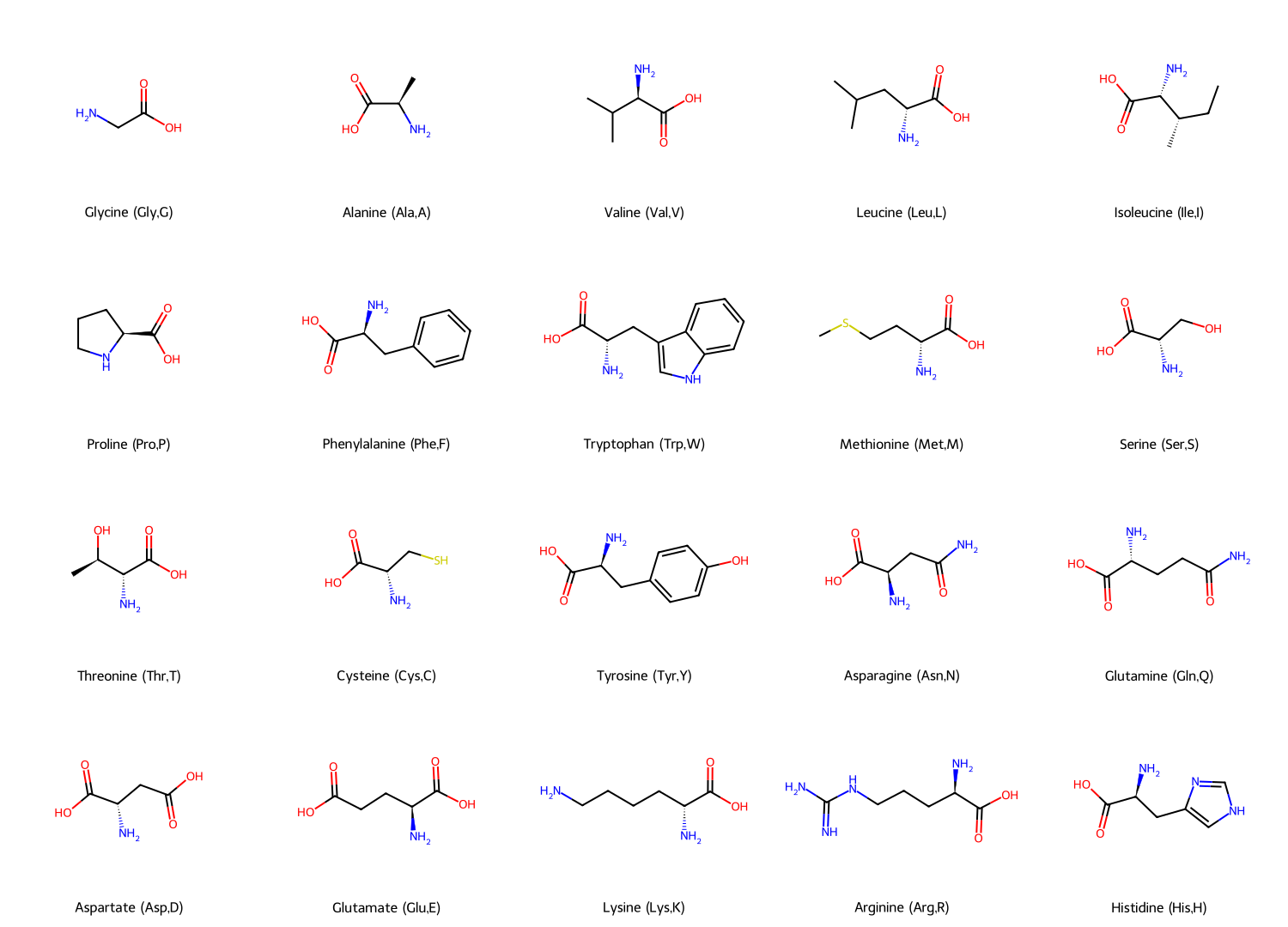
The four DNA bases — G · C · A · T
The "letters" of DNA. Guanine and Adenine are purines (fused double ring); Cytosine and Thymine are pyrimidines (single ring). In the double helix, A pairs with T (2 hydrogen bonds) and G pairs with C (3 hydrogen bonds).
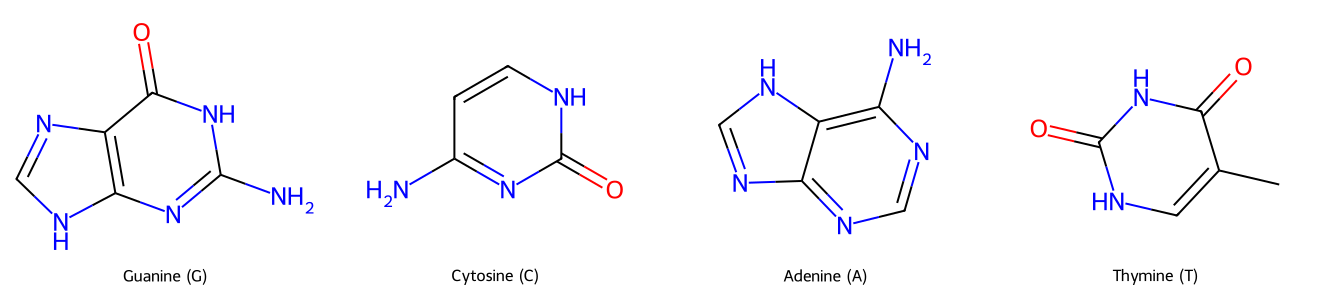
The four RNA bases — G · C · A · U
RNA uses the same bases as DNA except it replaces Thymine (T) with Uracil (U). (RNA also uses a different sugar — ribose instead of deoxyribose — see the next panel.)
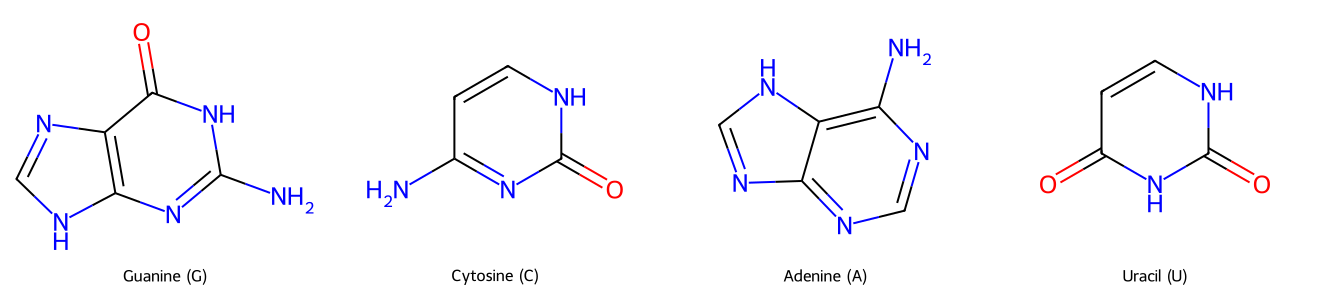
A nucleotide = phosphate + sugar + base
The single repeating unit of every nucleic acid. The only chemical difference between a DNA and an RNA building block is the sugar: RNA's ribose carries an extra hydroxyl (2′-OH) that DNA's deoxyribose lacks.
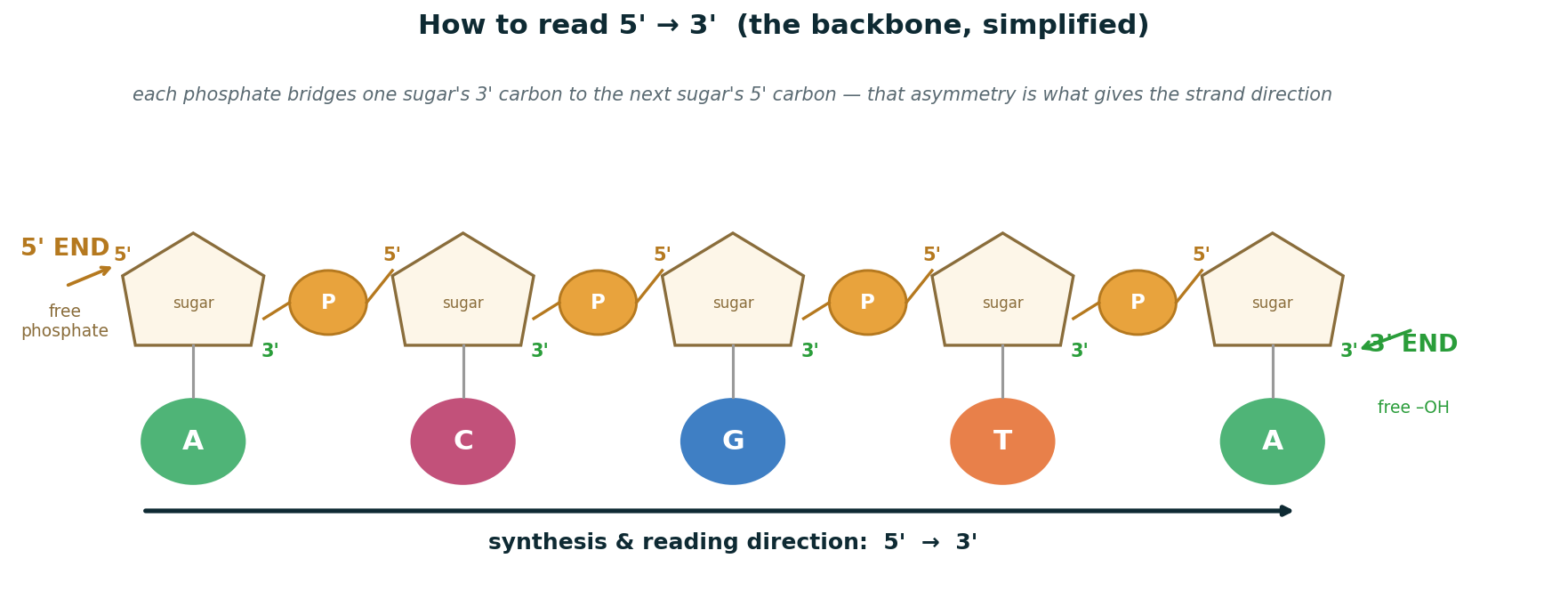
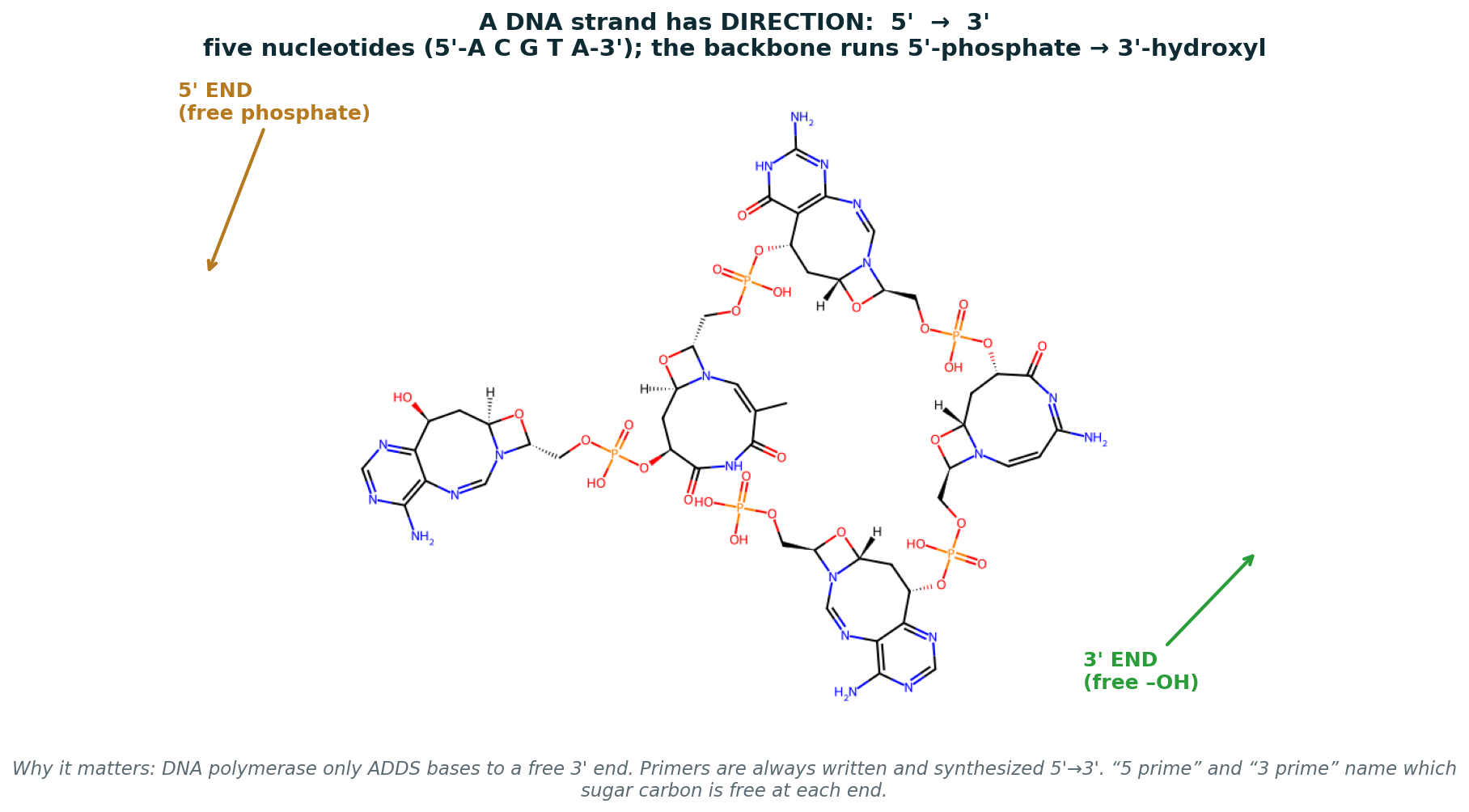
A DNA strand has direction: 5′ → 3′
This is the thing people most often confuse. A strand is not symmetric: each phosphate links one sugar's 3′ carbon to the next sugar's 5′ carbon. So one end has a free 5′ phosphate, the other a free 3′ hydroxyl. DNA polymerase only adds bases to a free 3′ end — which is why primers are always written and built 5′→3′.
Primer & Probe — a short DNA strand
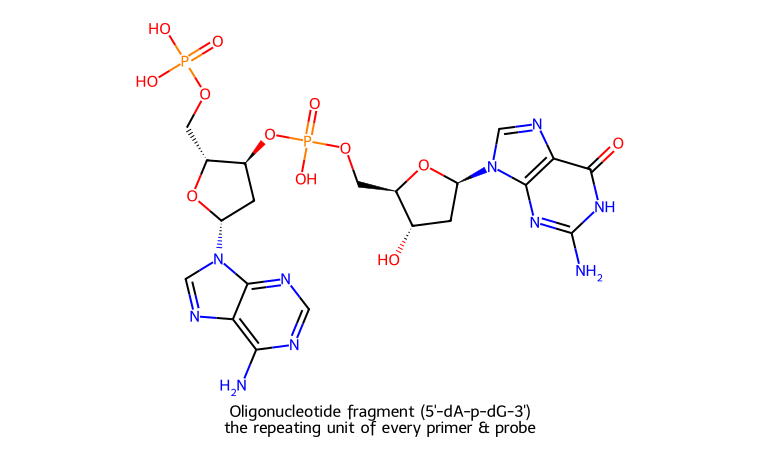
A primer and a probe are chemically the same kind of molecule: a short single strand of DNA (~18–25 nucleotides). Here are two units joined by the phosphodiester backbone — repeat this chain and you have a primer. (A probe additionally carries a fluorescent dye.)
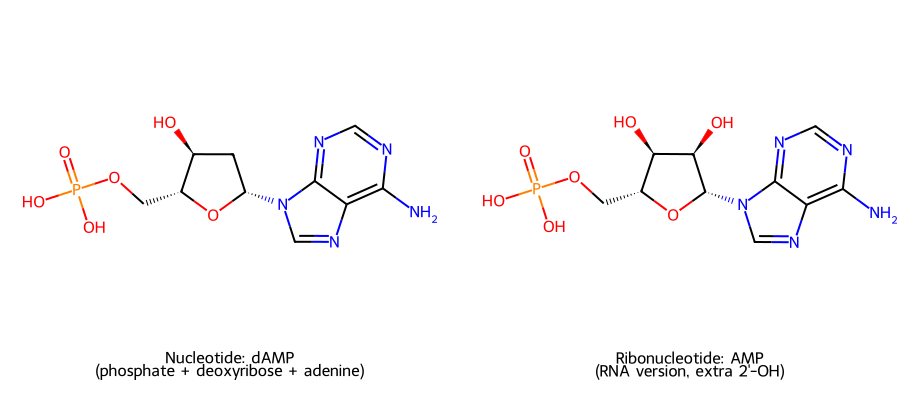
The 20 standard amino acids
The building blocks of proteins. All share the same backbone (an amino group, a carboxyl group, and a central carbon); each differs only in its side chain — which determines whether it's water-loving, water-fearing, acidic, basic, or able to form special bonds.